
A plain-language guide to BC’s new housing laws and what they mean for your Coquitlam, Port Moody, or Port Coquitlam property.
The short answer
BC’s Small-Scale Multi-Unit Housing Act (Bill 44, 2023) gives most Tri-Cities residential lots the legal right to 3–6 units without a rezoning. Lots near SkyTrain stations may qualify for even more under Bill 47 Transit-Oriented Areas. If you own a single-family lot in Coquitlam, Port Moody, or Port Coquitlam, your land is worth more than it was two years ago.
Before 2023, most residential lots in the Tri-Cities were zoned RS-1 or equivalent — one home, period. Bill 44 overhauled that province-wide. Every municipality covered by the Act, including Coquitlam, Port Moody, and Port Coquitlam, was required to adopt SSMUH-compliant zoning by June 2024.
The unit allowance is tied to lot size. No rezoning application. No public hearing. No council vote. If your lot meets the threshold, the additional units are permitted as of right.
Units on small lots
Lots up to 280 m² (~3,000 sq ft) — typical small urban infill lot
Units on standard lots
Lots 280–4,050 m² (~3,000–43,560 sq ft) — the most common Tri-Cities lot size
Units near frequent transit
Lots within 400 m of a frequent-transit corridor, regardless of size
| Lot size | Max units (standard) | Max units (near frequent transit) |
|---|---|---|
| Up to 280 m² (≤3,014 sq ft) | 3 | 6 |
| 280 – 4,050 m² (3,014 – 43,560 sq ft) | 4 | 6 |
| Over 4,050 m² (>43,560 sq ft) | 1 + accessory dwelling | 6 |
Unit counts are SSMUH minimums municipalities must allow. Individual city rules (setbacks, lot coverage, parking) still apply. Verify with the relevant city before purchasing or designing.
Bill 47 (the Transit-Oriented Areas Act, 2023) layers additional density permissions on top of SSMUH for properties near rapid-transit stations. Each Evergreen Extension station in the Tri-Cities has a legislated TOA with two zones: 200 m from the station entrance (high-rise, reduced parking) and 400 m (mid-rise, 6+ units).
In the Tri-Cities, this directly affects land near Burquitlam, Coquitlam Central, Lincoln, Lafarge-Lake-Douglas, Moody Centre, and Inlet Centre stations. For these properties, the development math is fundamentally different from a standard residential lot.
The key practical difference from SSMUH: Bill 47 TOA permissions can allow high-rise scale projects, but they generally require more capital, a larger assembly, and a developer/builder partnership. SSMUH fourplexes and sixplexes can be owner-built or financed on a single-lot basis.
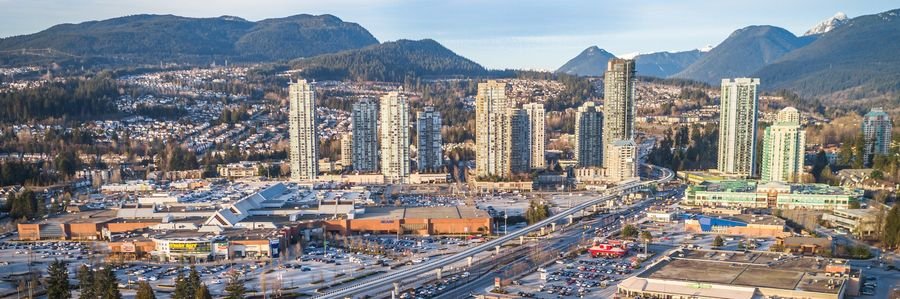
Coquitlam lots in established neighbourhoods like Central Coquitlam and Ranch Park now qualify for up to 4 units under SSMUH, without rezoning.Read the Coquitlam guide →
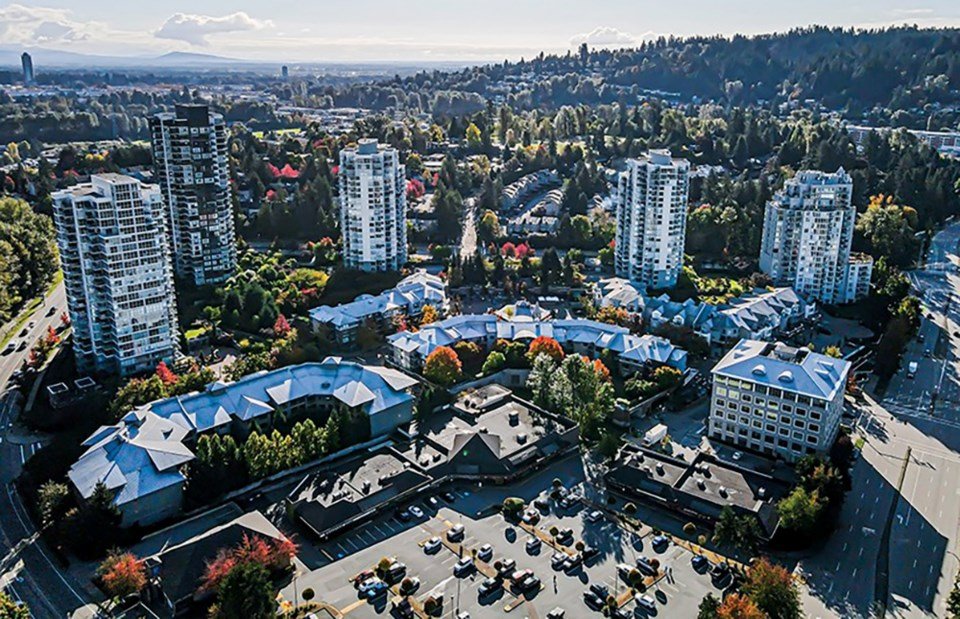
Port Moody lots near Moody Centre and Inlet Centre stations sit inside Bill 47 Transit-Oriented Areas — the highest-density zone in the region outside of downtown Vancouver.Read the Port Moody guide →
Free Tool
Enter your lot dimensions and location. Get an instant estimate of how many units SSMUH allows, plus a plain-language read of any transit-area rules that apply.
City Guide
Coquitlam-specific SSMUH rules, setback requirements, and live MLS listings of lots with development potential.
City Guide
Port Moody rules and Transit-Oriented Area details for lots near Moody Centre and Inlet Centre SkyTrain.
City Guide
Port Coquitlam’s SSMUH thresholds and live lot listings for Citadel, Riverwood, and the wider city.
What is Bill 44 (SSMUH) and how does it affect my Tri-Cities property?
Bill 44 (the Small-Scale Multi-Unit Housing Act, 2023) requires BC municipalities to allow 3–6 units on most residential lots that previously allowed only a single-family home. In Coquitlam, Port Moody, and Port Coquitlam the new zoning was in effect by June 2024, meaning many lots that seemed limited now qualify for a duplex, triplex, fourplex, or sixplex without a rezoning application.
How many units can I build on my lot under SSMUH?
It depends on lot size and proximity to frequent transit. Lots up to 280 m² allow 3 units; lots between 280 m² and 4,050 m² allow 4 units; lots over 4,050 m² allow 1 unit plus an accessory dwelling. Lots within 400 m of a frequent-transit corridor may qualify for 6 units regardless of size. The "What Can I Build?" tool on this site estimates your count once you enter your lot dimensions.
What is Bill 47 (Transit-Oriented Areas) and who does it affect?
Bill 47 established Transit-Oriented Areas (TOAs) around SkyTrain and major bus-exchange stations. Within 200 m of a station, high-rise development can be approved with reduced parking requirements. Within 400 m, mid-rise is permitted. In the Tri-Cities this most directly affects properties near Burquitlam, Coquitlam Central, Lincoln, Lafarge-Lake-Douglas, Moody Centre, and Inlet Centre stations.
Do I still need a building permit to add units under the new rules?
Yes. SSMUH removes the need for a rezoning or OCP amendment, but you still need a standard building permit, site-plan approval, and must meet all municipal setback, height, parking, and utility-servicing requirements. Hiring a licensed architect early saves time and money.
Does adding units increase my property value if I sell?
In most cases, yes. A lot with permitted development potential (backed by SSMUH zoning) is generally worth more to a developer or builder than an identical lot without it. The premium varies by lot size, location, and current market conditions. Sebastian can give you a current-market read before you decide whether to build, sell as-is, or sell with building plans.
What is the difference between SSMUH and a full rezoning?
A full rezoning is a discretionary municipal process that can take 12–24 months and may be denied. SSMUH is legislated as-of-right zoning: if your lot meets the thresholds, the units are permitted without a public hearing or council vote. This dramatically lowers the risk and timeline for small-scale multiplex development.
Sebastian has a construction project-management background alongside his real estate licence — he can read a site, understand the development math, and tell you whether your best move is to build, sell as-is, or sell with plans. No generic market talk.
Talk to SebastianThis page provides general information about BC’s Small-Scale Multi-Unit Housing Act (Bill 44) and Transit-Oriented Areas Act (Bill 47) and is not legal, development, or municipal planning advice. Unit counts, setbacks, and eligibility must be verified with the relevant municipality and a qualified architect or planner before purchasing or proceeding. Lot-size thresholds are provincial minimums — individual city rules may differ. Sebastian Czarkowski is a licensed REALTOR® (BCFSA). Last updated June 2026.