
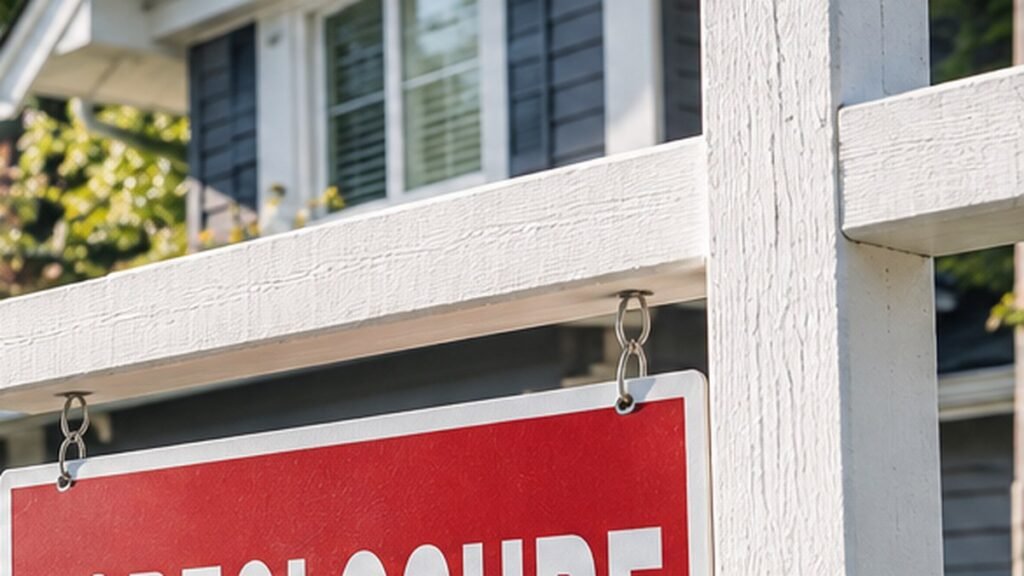
If you’ve missed mortgage payments, you’re probably getting letters you’d rather not open. You are not the first person this has happened to — job losses, illness, separation, a renewal at a much higher rate — and you have more time and more options than most people think.
The worst thing you can do is nothing. The second worst is to panic and sign the first offer that promises to make the problem go away. Here is how the process actually works in British Columbia, how long each stage usually takes, and what you can still control at every step.
How it unfolds in BC
Foreclosure in BC goes through the BC Supreme Court. A lender can’t simply change the locks or sell your home on its own — a judge supervises each step, and each step takes time:
- Missed payments and a demand letter. After a few missed payments, the lender (usually through its lawyer) sends a formal demand. Many mortgages allow the lender to demand the whole balance at this point, not just the payments you’ve missed.
- A petition to the court. If it isn’t resolved, the lender files a petition for foreclosure and you’re served with court papers. There are deadlines to respond — this is the moment to talk to a lawyer, even if you plan to sell.
- The Order Nisi and the redemption period. At the hearing the court confirms how much is owed and usually sets a redemption period — often around six months for a home, though a judge can make it shorter (for example, when there’s little equity left) or longer. During this window you can still pay out the mortgage, refinance, or sell.
- Conduct of sale. If nothing is resolved by the end of the redemption period, the lender usually asks the court for “conduct of sale” — the right to sell your home. From here, the lender and its REALTOR® are in charge of the listing, not you.
- Court approval and completion. The home is sold “as is,” and the accepted offer has to be approved by a judge — sometimes with other buyers showing up at the hearing to bid higher. Once approved, the sale completes and the court can order you to leave by the completion date.
The timeline at a glance
Typical BC foreclosure timeline — months from the first missed payment
Approximate and for illustration only. Real cases can move faster or slower — a lender may act sooner, a judge may shorten or extend the redemption period, and a sale can close quickly or take months. Your lawyer can tell you where your case actually stands.
The key thing the timeline shows: for most of the process — often the better part of a year — you are still the one who can decide how, when and for how much your home is sold. That window closes when the lender gets conduct of sale.
Why selling on your own terms usually leaves you more
By the time a home becomes a court-ordered sale, more interest, penalties, the lender’s legal fees and the costs of the court process have been added to what you owe — and all of it comes out of the sale price before you see anything. The home is also sold “as is,” usually with little preparation, and the listing openly says “court-ordered sale,” which many buyers read as “make a low offer.”
If you sell while you still have control, you choose the timing, you can prepare and present the home properly, and you negotiate the price. Here is a simple illustration of how that can add up.
An illustration (made-up round numbers)
| You sell on your terms | Court-ordered sale later | |
|---|---|---|
| Sale price | $850,000 | $800,000 |
| Commission & closing costs | − $25,000 | − $24,000 |
| Mortgage balance | − $600,000 | − $600,000 |
| Missed payments, extra interest & penalties | − $15,000 | − $35,000 |
| Lender’s legal & court costs | — | − $20,000 |
| What’s left for you | $210,000 | $121,000 |
Hypothetical example for illustration only — not a prediction of what any home will sell for or what any lender will charge. Court-ordered sales don’t always sell below market, and your costs depend on your mortgage terms and how far the court process has gone.
And if a sale doesn’t cover everything owed, lenders in BC can ask the court for a judgment against you personally for the shortfall. A stronger sale price protects you from that as well.
Your first 30 days: a checklist
- Open every letter. Write down every date on them — especially court dates and response deadlines. Missing a deadline can take options off the table.
- Call your lender before it goes to court. Ask plainly what they can offer: a deferral, a catch-up plan, a longer amortization. Take notes and ask for anything important in writing.
- Book a consultation with a BC lawyer. Especially if you’ve been served with court papers.
- Find out what your home is realistically worth today — not what a neighbour’s sold for two years ago — and what you’d walk away with after the mortgage and costs.
- Make a list of every debt secured on the home: first mortgage, second mortgage, home equity line of credit, any judgments or liens. They all get paid out of a sale.
- Talk to the people who live with you. Decisions are easier, and moves are calmer, when nobody is surprised.
Other options worth checking first
Selling isn’t always the answer. Depending on your situation, it’s worth asking about:
- A deal with your lender. Some lenders will agree to a payment deferral, a longer amortization, or a plan to catch up — especially before the court process starts, when their own costs are still low.
- Refinancing through a mortgage broker, if you have equity and your income can support it. Be careful with high-interest private loans that only buy a few months and add fees on top.
- Renting out part of the home or the whole home, if the numbers work and your mortgage allows it.
- Free, confidential help: the Credit Counselling Society is a non-profit that helps with budgets and debt, and Clicklaw has plain-language information on BC foreclosure.
- A lawyer. For anything involving the court process, a lawyer is the right person. I’m not one, and nothing here is legal advice.
Watch out for “foreclosure rescue” offers
When court filings become public, some homeowners start getting calls, letters and flyers offering to “stop your foreclosure” or “buy your house for cash in 7 days.” Some are legitimate; some are designed to take the equity you’ve built. Be very careful with anyone who:
- Asks for money up front to negotiate with your lender for you.
- Wants you to sign over title “temporarily” while they “fix” the mortgage.
- Offers to buy the home and rent it back to you with an option to buy it back later — the terms often make buying it back unrealistic.
- Makes a fast cash offer far below market value and pressures you to sign today.
- Tells you not to talk to a lawyer or your lender.
A legitimate buyer or advisor will be comfortable with you taking a day, getting a second opinion, and having a lawyer review anything you sign.
How I can help
What I can do is tell you, honestly and privately, what your home would likely sell for right now, what you’d walk away with after the mortgage and costs, and how much time you realistically have to sell well. Sometimes the numbers show you can keep the home; sometimes they show that selling now protects the equity you’ve built. Either way, you’ll be deciding with real numbers instead of guessing — and I’ll work alongside your lawyer, not instead of one.
If you decide to sell, I’ll plan the timing around your court dates, prepare and market the home properly, and keep the process as discreet as the situation allows.
Common questions
How long do I have before my home is sold?
It depends on how quickly your lender acts and what the court orders, but from the first missed payment it’s commonly the better part of a year, sometimes longer. The redemption period set in the Order Nisi — often around six months for a home — is the most important date. Your lawyer can tell you exactly where your case stands.
Can I still sell my home after I’ve been served with court papers?
Generally yes — during the redemption period you can usually still sell, as long as the sale pays out the lender. Once the lender has been given conduct of sale, the lender controls the sale instead. Because a court proceeding is underway, have your lawyer involved so the sale and payout are handled properly.
Can I keep living in my home during the process?
Usually, yes — homeowners typically keep living in the home through the redemption period and while it’s for sale. When a court-approved sale completes, the court can order you to give up possession by a set date, so plan your move early rather than at the last minute.
Will I still owe money after the sale?
If the sale price doesn’t cover the mortgage, interest, costs and fees, the lender can ask the court for a personal judgment for the difference. If there’s money left over after every secured debt is paid, it goes to you. That’s why the price the home sells for matters so much.
What if I have a second mortgage or a home equity line of credit?
All the debts registered against the home are paid out of a sale in order of priority, and any of those lenders can start its own court process. Include all of them when you work out what you’d walk away with.
Will my neighbours find out?
Court filings are public records, and a lender’s court-ordered listing is usually marketed as one. A sale you arrange yourself is listed like any other home. I keep every conversation confidential.
How does this affect my credit?
Missed payments already show up on your credit report. A court judgment for a shortfall can do further damage. For advice about your credit specifically, the Credit Counselling Society is a good free place to start.
Talk to me — confidentially
Call or text me directly. It stays between us, and there’s no obligation.
Not ready to talk? Leave your details and I’ll reach out personally.
Thank you — I've got it.
I'll reach out to you personally, usually within a few hours. If it's urgent, call or text me at 604-788-4355.
This article is general information about the BC foreclosure process, not legal or financial advice. Every situation is different — please speak with a lawyer about your specific case. Sebastian Czarkowski is a REALTOR® with Royal LePage Elite West, 400-2963 Glen Drive, Coquitlam, BC V3B 2P7.
Looking to buy a court-ordered sale instead? Read how court-ordered sales work for buyers or browse current listings.