
Condo Buyer Advice — Tri-Cities, BC
Strata Documents to Review Before Buying a Condo: A BC Buyer’s Checklist
Buying a strata condo in Coquitlam, Port Moody, or Port Coquitlam means you’re not just purchasing four walls — you’re buying into a shared corporation with its own financial health, rules, and history. The strata documents package is where that story lives, and knowing how to read it can be the difference between a sound investment and an expensive surprise. If you’re exploring buying a condo in Coquitlam or anywhere in the Tri-Cities, reviewing these documents thoroughly — ideally with your REALTOR® and a strata document reviewer — is one of the most important steps you’ll take before removing subjects. This checklist walks you through exactly what to look for and what should raise a red flag. Browse current Tri-Cities listings →
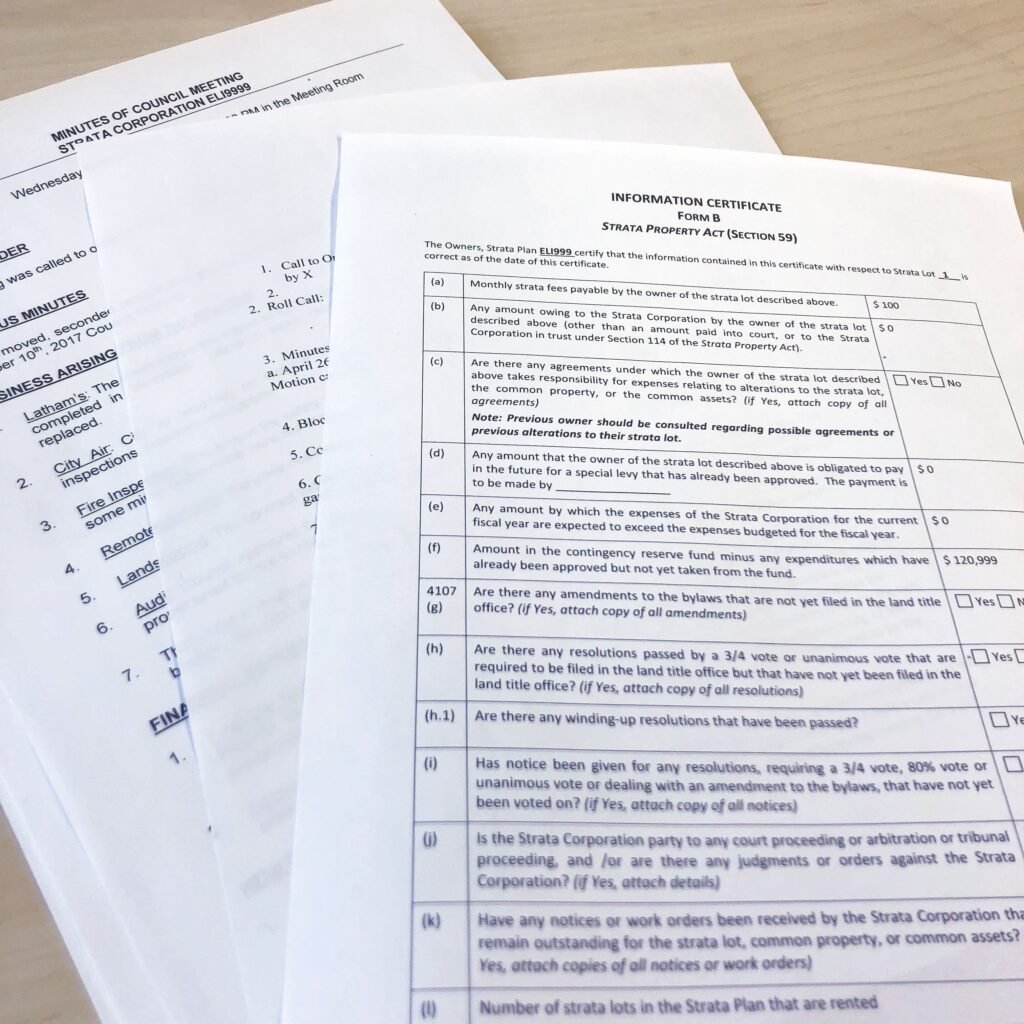
Under BC’s Strata Property Act, sellers are required to provide a standard Form B Information Certificate along with supporting strata documents as part of a purchase. Buyers typically receive this package during their subject removal period, which is why it’s critical to understand the documents before you’re on the clock. The core package should include the depreciation report, contingency reserve fund (CRF) balance, at least two years of meeting minutes, the current bylaws and rules, any engineering or building envelope reports, and a disclosure of any special levies — past, approved, or proposed.
Each of these tells you something different about the building’s condition, financial stability, and lifestyle restrictions. Once you’ve identified properties you’re serious about — a process covered in detail during the search and view step — your agent should help you request the full strata document package promptly so you have maximum time to review it before your subject removal deadline.
In the Tri-Cities, buildings range from newer high-rises in Coquitlam Centre to older wood-frame complexes in Port Coquitlam, and the issues you’ll find in these documents vary significantly by building age and type. A newer building might have low CRF contributions and no depreciation report yet; an older building might have a leaky condo history or deferred maintenance. Either situation requires informed eyes.
Related resources
Helpful tools & guides
Key takeaways
A depreciation report is a 30-year forecast of a strata corporation’s anticipated repair and replacement costs for common property — things like the roof, elevator, parkade membrane, plumbing stack, and exterior cladding. In BC, most strata corporations with five or more units are required to obtain one. When reviewing it, check when the report was prepared (anything older than three years is stale), what major expenditures are projected in the next five to ten years, and whether the strata’s recommended funding scenario is actually being followed. A well-funded strata will show a CRF balance that tracks closely with the report’s preferred scenario. A strata that consistently elects the minimum funding option is quietly passing future repair costs onto current and future owners. If there’s no depreciation report at all — and the strata voted to waive it — that’s a red flag in itself, particularly for older buildings where capital repairs are almost certain.
The contingency reserve fund (CRF) is the strata’s savings account for major repairs. A healthy CRF means the strata can handle a significant repair — say, a roof replacement or elevator overhaul — without immediately levying owners for a lump sum payment. When reviewing the CRF, compare the current balance against what the depreciation report recommends for that year. A CRF that’s significantly underfunded relative to the recommended balance is a warning sign that a special levy may be coming. Also look at the annual contribution rate: is the strata consistently increasing contributions to keep pace with aging infrastructure, or has it kept contributions flat for years to keep monthly fees low? Low strata fees can feel attractive, but if they’re achieved by starving the reserve fund, you may be buying into a future assessment. Ask your REALTOR® to help you contextualize the CRF balance for the building’s age and size.
The last two years of Annual General Meeting (AGM) and Special General Meeting (SGM) minutes are often the most revealing documents in the entire package. These minutes show you what owners are actually arguing about, what repairs have been authorized or deferred, what engineering concerns have been raised, and whether council is proactive or reactive in managing the building. Look for recurring complaints — a leak that appears in three consecutive sets of minutes signals a problem that hasn’t been fixed. Look for motions that were defeated: if owners voted against a necessary repair because they didn’t want the assessment, that repair still needs to happen eventually. Watch for mentions of litigation, bylaw enforcement disputes, or contentious relationships between council and owners. These minutes also tell you about rental and pet bylaw changes that may have been passed recently and haven’t yet made it into the formal bylaw document, which is why reading both is essential.
The strata’s bylaws and rules govern daily life in the building: how many pets you can have and what size, whether you can rent your unit and under what conditions, short-term rental restrictions, noise and renovation hours, parking regulations, and much more. BC’s Strata Property Act sets default bylaws, but most stratas have amended them — sometimes significantly. Before buying, confirm that your intended use of the unit is permitted. If you plan to rent it out, check whether the strata has a rental cap or a complete rental prohibition. If you have a large dog, verify the pet bylaw explicitly. Regarding special levies: any levy that has been passed but not yet fully collected will appear on the Form B and may be your responsibility at closing, depending on how the contract is written. Engineering and building envelope reports should be read carefully for any outstanding deficiencies or recommended work that hasn’t been actioned — these can translate directly into future costs. Never skip these documents, even on a newer building.
Frequently asked questions
Common questions answered
What strata documents should I review before buying a condo in BC?
Before buying a strata condo in BC, you should review the depreciation report, the contingency reserve fund (CRF) balance, at least two years of AGM and SGM meeting minutes, the current bylaws and rules, any engineering or building envelope reports, the Form B Information Certificate, and disclosure of any special levies — past, approved, or proposed. Together, these documents reveal the building’s financial health, physical condition, and the lifestyle rules you’ll be required to follow as an owner.
What are red flags in strata documents?
Common red flags in strata documents include a CRF that is significantly underfunded relative to the depreciation report’s recommended balance, a missing or outdated depreciation report, recurring unresolved maintenance issues in meeting minutes, approved or pending special levies, mentions of active litigation involving the strata, engineering reports with outstanding deficiencies, and a pattern of voting to defer necessary repairs. Any one of these warrants a closer look; multiple red flags in the same building should make a buyer seriously reconsider or renegotiate.
How long do I have to review strata documents after an accepted offer?
In BC, strata document review happens during your subject removal period, which is typically negotiated as part of your offer — commonly five to ten business days for a condo purchase, though this varies. The seller’s agent is required to provide the strata documents promptly after acceptance. Because the review window is short and the documents can be extensive, it’s advisable to engage a professional strata document review service in addition to reviewing key items yourself with your REALTOR®. Never waive subjects without completing a thorough document review.
What is a special levy and am I responsible for it when buying a condo?
A special levy is a one-time charge assessed to all strata owners to fund a major repair or expense that the contingency reserve fund cannot fully cover. When you buy a strata unit, any special levy that has already been passed by the owners — even if not yet fully collected — is disclosed on the Form B. Whether the buyer or seller is responsible for paying an outstanding levy depends on how your purchase contract is written, so this must be negotiated explicitly. Your REALTOR® should identify any levies in the documents and address allocation clearly in the contract.
Can a strata in BC prohibit rentals or pets?
Yes. BC strata corporations can restrict or prohibit short-term rentals such as Airbnb, and they can limit long-term rentals through rental caps or rental prohibition bylaws, subject to certain protections under the Strata Property Act. Pet restrictions are also common — some stratas limit the number, size, or breed of pets permitted. These rules are found in the strata’s bylaws and rules, which form part of the document package. Always verify the current rental and pet bylaws before removing subjects, especially if renting the unit or owning pets is part of your plan.
Sebastian Czarkowski
REALTOR® · Royal LePage Elite West · Coquitlam, BC
Questions about buying or selling in the Tri-Cities? Reach out directly.
For educational purposes only. Not intended as financial or legal advice.
Sebastian Czarkowski, REALTOR® | Royal LePage Elite West | sebastianrealestate.ca